
Case studiesMechanism design
Designing a four-speed dog-clutch gearbox from a brief
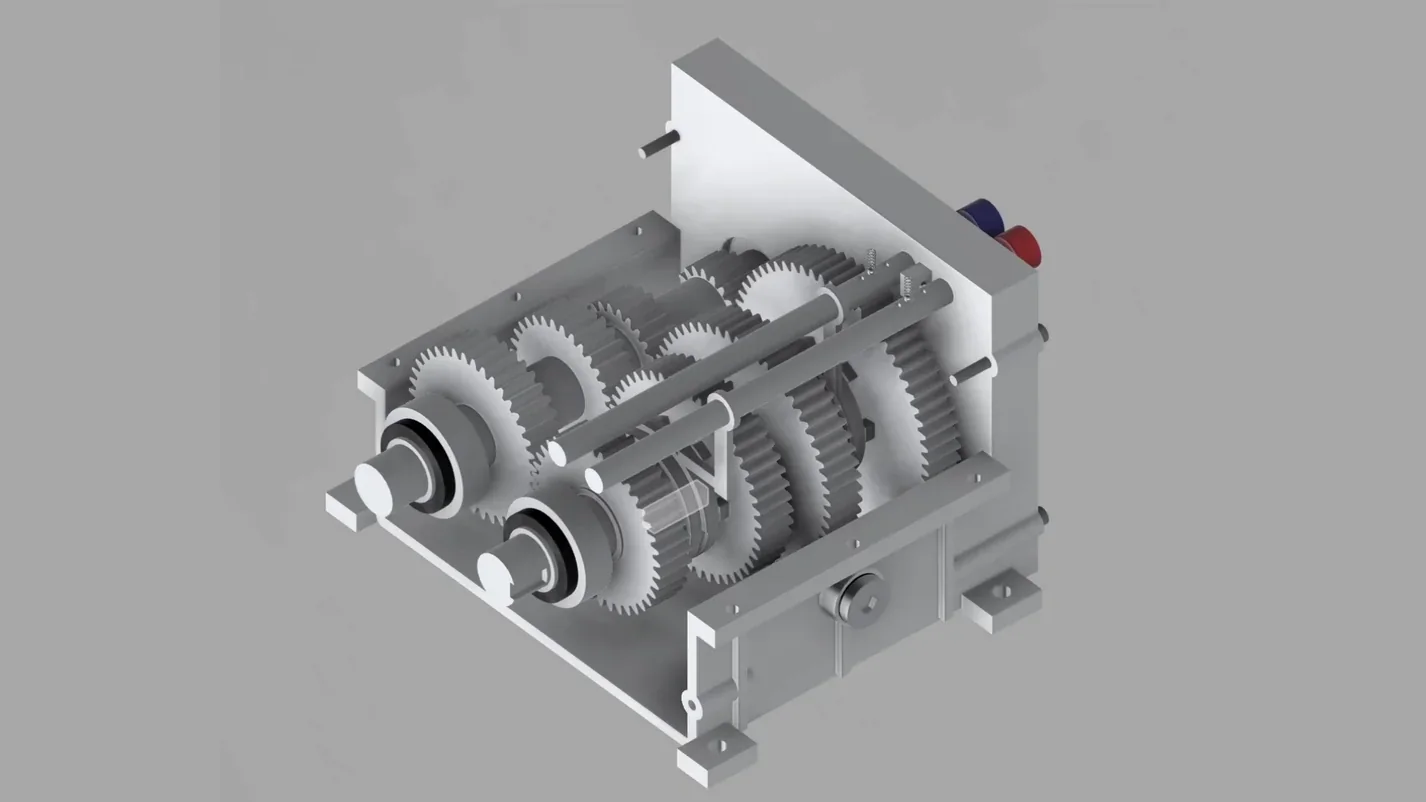
A four-speed gearbox designed from a written brief: 93 solids, with all four ratios measured from the assembly in motion.
- Input
- Written design brief
- Output
- 93-solid assembly, F3D and STEP
- Application
- Autodesk Fusion
- Session
- 2 h 55 min
The brief
The brief called for a four-speed gearbox with face dogs, two selector rails, spring detents, and a cross-rail interlock, sized for 10 N·m at 600 rpm, with no synchronizers.
Vector treated the brief as an acceptance checklist and froze the design and test criteria before building. The smallest input pinion is integral with its shaft, avoiding a thin keyed rim.
How the work was done
- 01
Prove one mesh before building the rest
Vector stopped at the first 18/62 gear pair and checked it before expanding the assembly: 545 intersection samples across two tooth pitches with zero overlap, 0.120 mm of measured backlash, and a 3.444:1 ratio read from the actual body angles.
- 02
Check what the solver did
An early test requested a 0.137° input move and got no motion. Fusion had grounded the first component automatically. Vector removed the hidden constraint and compared requested, applied, and measured angles before trusting any sweep.
- 03
Constrain the dog clutches
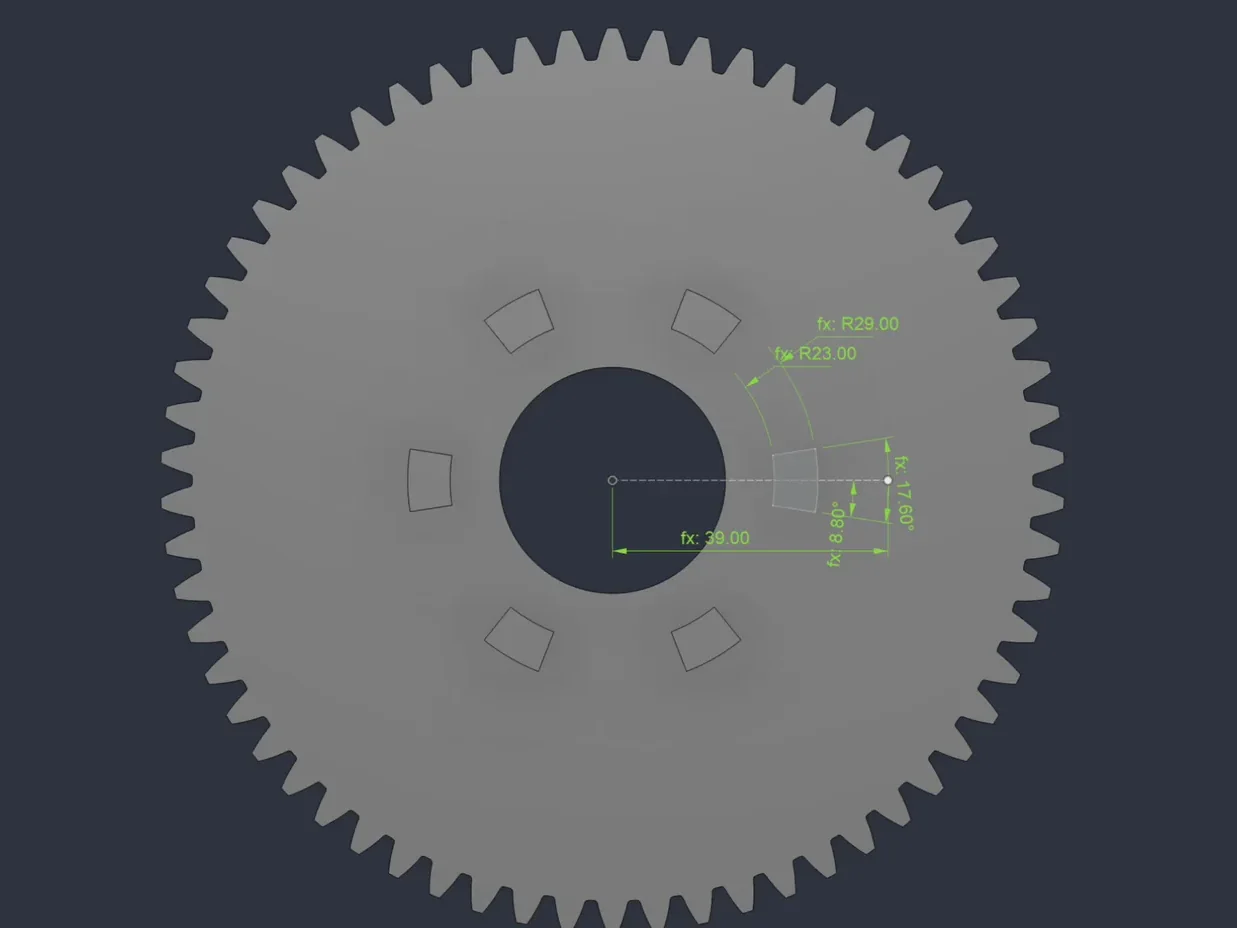
After a review flagged under-constrained dog sketches, all six sector profiles were fully constrained with zero Fix constraints. Widening the dog span from 16° to 17.6° updated all 24 patterned dog faces, then restored.
- 04
Test the interlock in the assembly
With one rail shifted 7 mm, the other stayed at zero whatever was requested, and the plunger moved passively by 1 mm. The allowed shift paths cleared 701 CAD samples in each direction on each rail.
- 05
Drive every gear
Each gear was selected with one active dog path and 4 mm of engagement, then driven from the input joint alone. Output, free gears, collars, and hubs were measured independently from their geometry.
- 06
Export and reopen
The native archive and the STEP file were each reopened and compared with the frozen baseline: body counts, bounds, critical interfaces, and high-accuracy volumes.
Caught and fixed in review
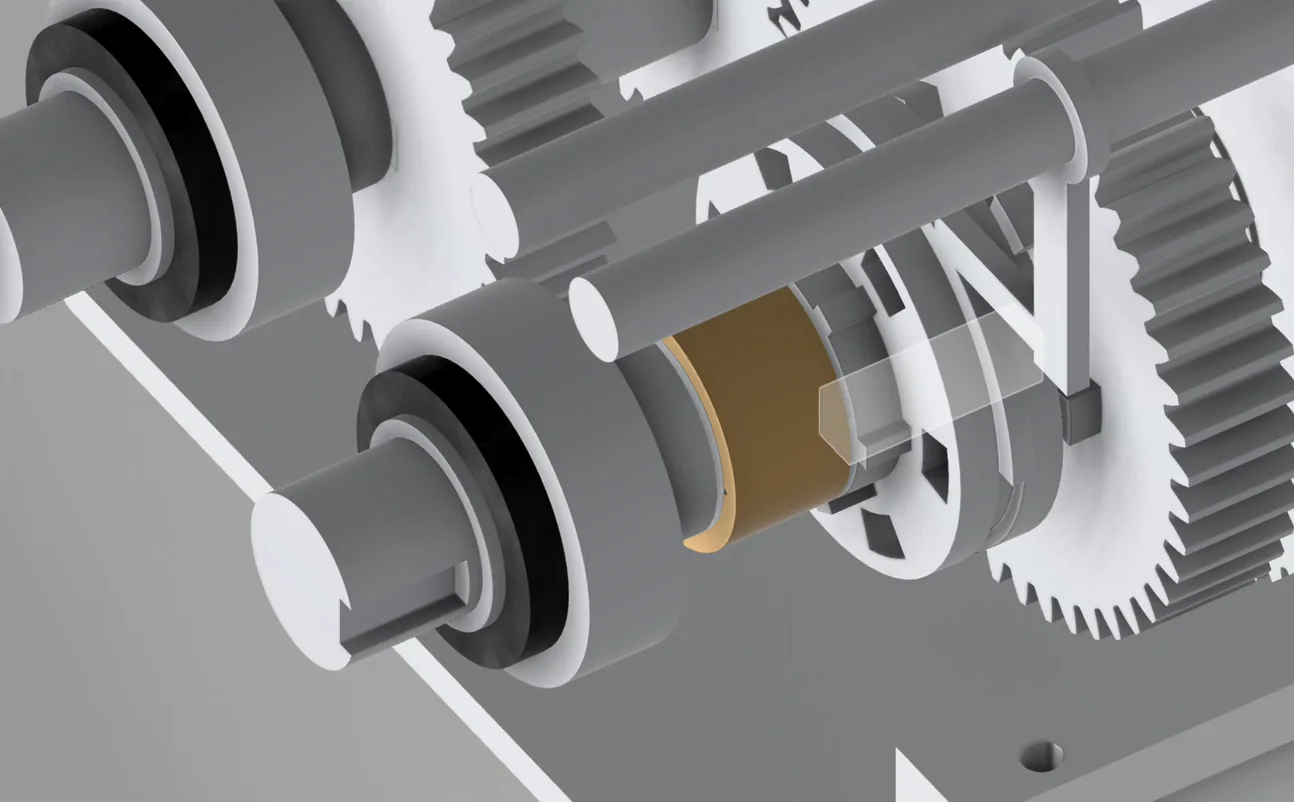
- A volume check showed that the first detent springs had a sheared cross-section instead of round wire. Vector rebuilt them by sweeping a true circle along the helix.
- A 14 mm selector grip would have reached the front carrier before full shift travel. Vector shortened both grips to 12 mm, leaving 1 mm of clearance.
The session
Watch the recording
Edited recording of a supervised session. Follow-up instructions are omitted, chat activity is summarized, and playback is accelerated. Demo notes and sources