


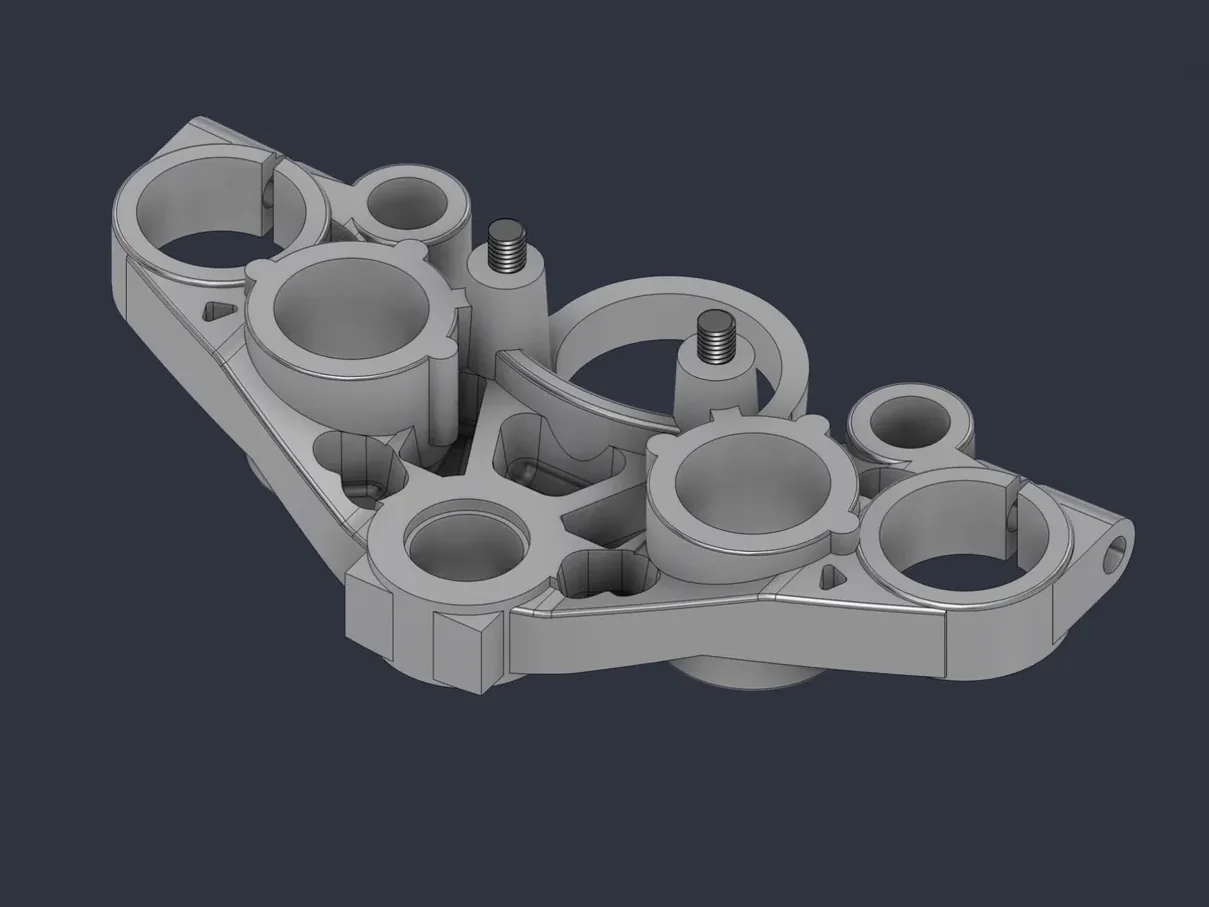
Rebuilding a cast triple clamp from a 3D scan
An Artec 3D scan of a motorcycle triple clamp, rebuilt as a parametric model in 37 sketches. Change a bore, the spacing, or the web, and the casting rebuilds around it.
Read the case studyStart with a pilot on your own parts. We’ll help you choose the work, agree on how results are checked, and roll Vector out to the engineers who need it.
A scan to rebuild, a drawing package to model, or a backlog of repairs. Start with parts your team already understands well enough to judge the result.
Set acceptance criteria before Vector starts: dimensions, clearances, ratios, and export round-trips. Results are measured against them, the same way our case studies are.
Every change is a native feature in your model, and each check Vector runs is reported in the conversation with its measured result.
Vector builds with sketches, features, mates, and parameters, so anyone on your team can open the model and keep working on it by hand.
It connects to the installation on your workstation. There’s nothing to migrate, and your files stay in the formats you use today.
Each step shows up in the conversation with what it changed, so you can follow the work and check it afterward.
Ask for a check and Vector measures the model: clearances, gear ratios, drawing callouts, and exported files.
An Artec 3D scan of a motorcycle triple clamp, rebuilt as a parametric model in 37 sketches. Change a bore, the spacing, or the web, and the casting rebuilds around it.
Read the case study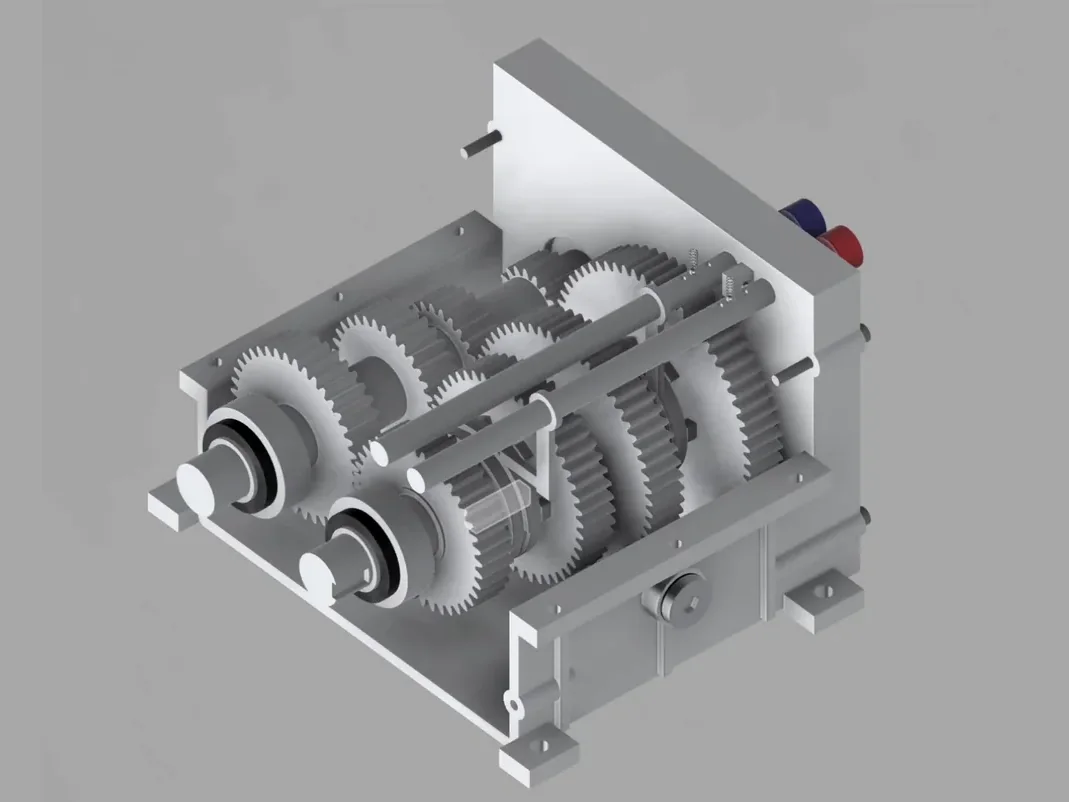
A four-speed gearbox designed from a written brief: 93 solids, with all four ratios measured from the assembly in motion.
Read the case study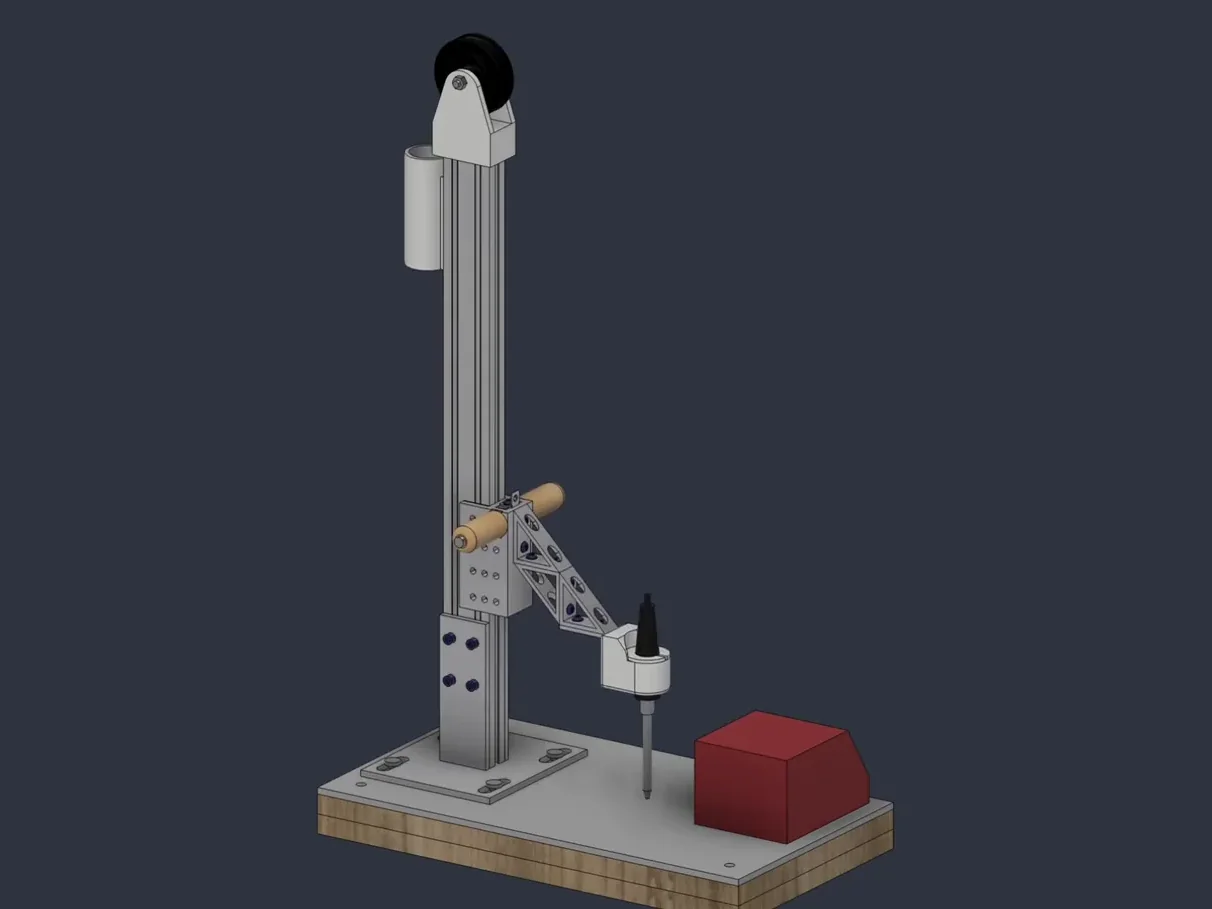
NASA HUNCH’s heat-stake press, modeled from its published drawing set: eleven custom parts, catalog hardware, and a working mechanism, checked against the sheets.
Read the case studyTell us about the parts and the CAD environment your team works in, and we’ll suggest where to start.