
Case studiesReverse engineering
Rebuilding a cast triple clamp from a 3D scan
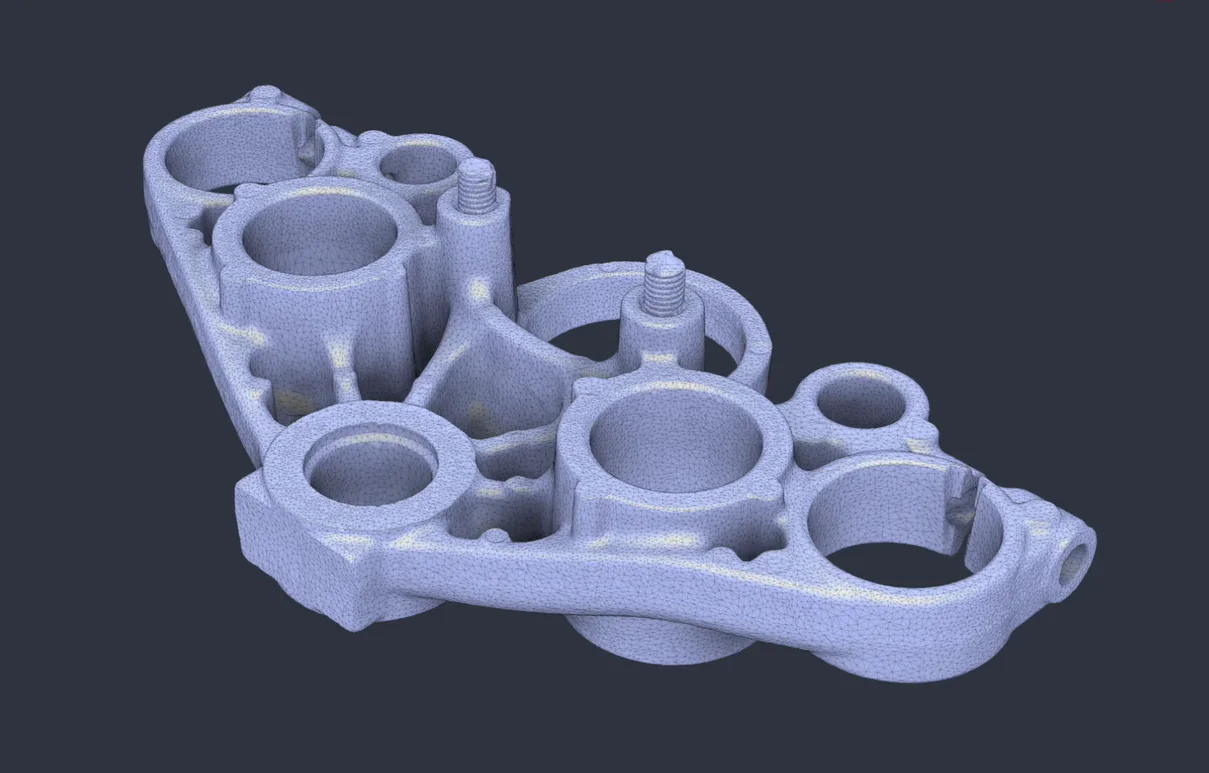
An Artec 3D scan of a motorcycle triple clamp, rebuilt as a parametric model in 37 sketches. Change a bore, the spacing, or the web, and the casting rebuilds around it.
- Input
- Artec 3D scan (mesh)
- Output
- Parametric model, F3D and STEP
- Application
- Autodesk Fusion
- Session
- 2 h 15 min
The brief
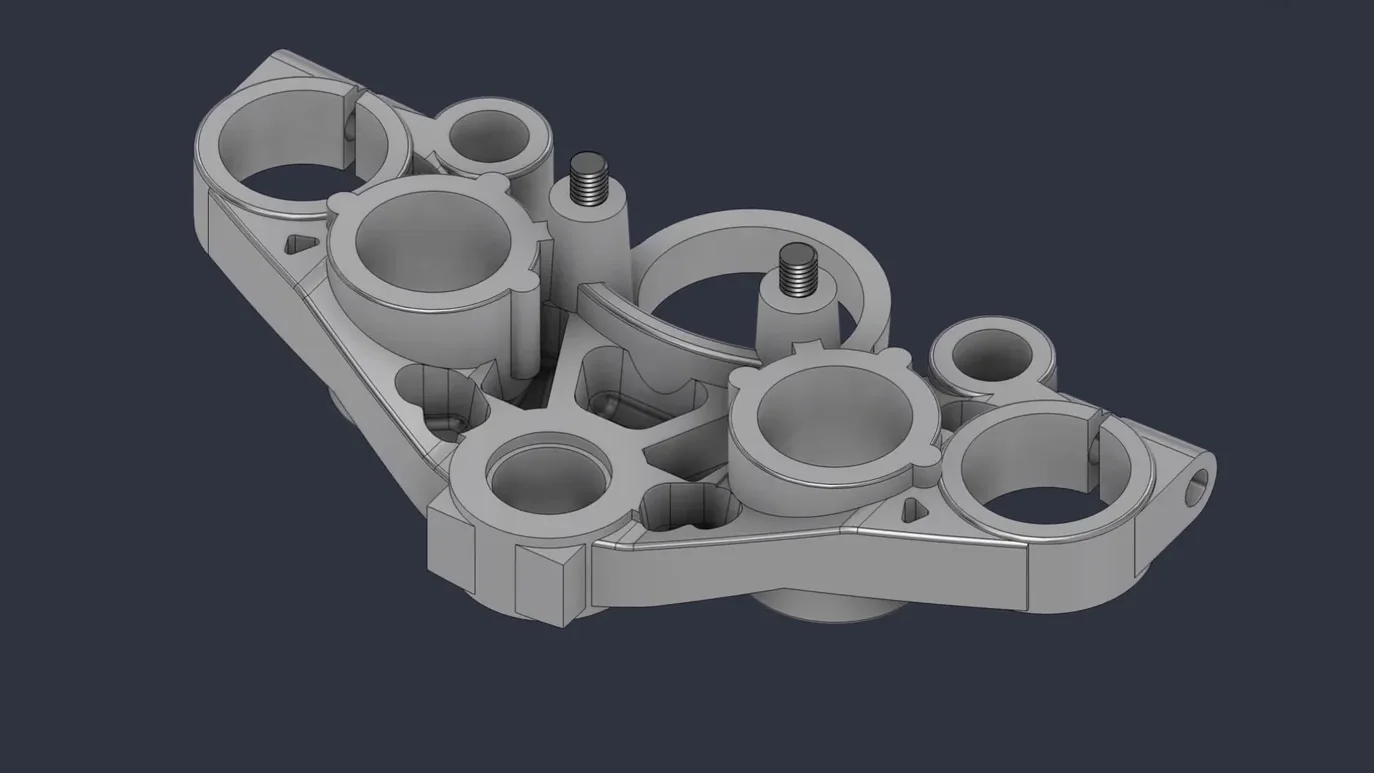
The input was a high-resolution Artec 3D scan of a motorcycle upper triple clamp: a casting with five machined bores, ribbed pockets, pinch slits, and two threaded studs. The goal was an editable model built the way an engineer would build it, with dimensions that actually drive the geometry.
How the work was done
- 01
Establish one datum frame
The two long bore axes in the scan differ by about 0.16°. Vector set a single rigid datum frame from the machined bores and kept measured offsets where they matter, rather than forcing a symmetry the casting doesn’t have.
- 02
Model with simple sketches
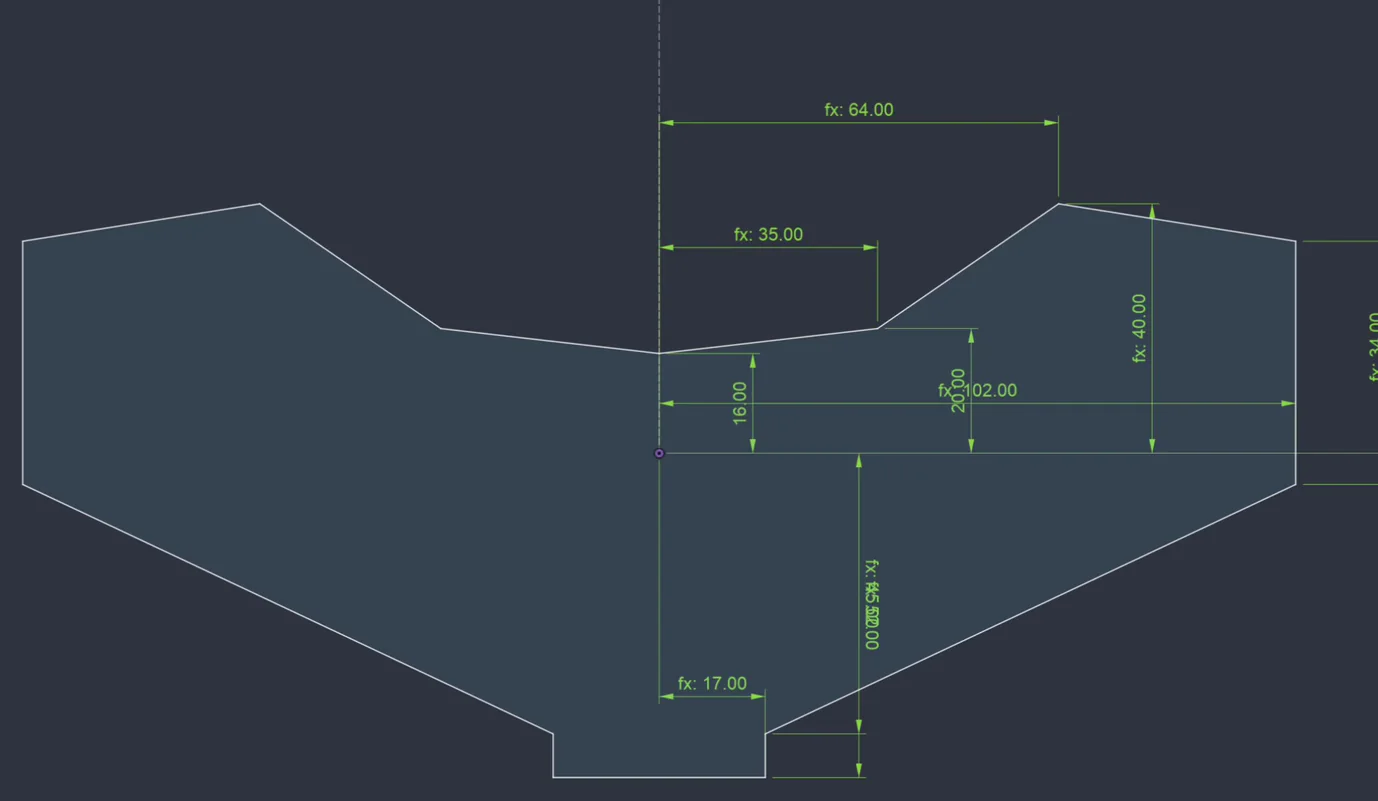
The web, bore sleeves, stem opening, ribs, pockets, and studs are compact line-and-arc sketches with tangent, equal, and symmetry relations. The cast pockets sit before the sleeves in the timeline, so moving a bore can’t gouge its wall.
- 03
Correct against the scan
Fitting sections exposed missing geometry: a raised curved rib, flared lands on the rear ring, three axial lobes on each primary sleeve, and a bridge roof that rises more gradually than the first model. Each correction went in as a native feature.
- 04
Prove the parameters
Bore diameter +10%, bore spacing +10%, and web thickness +15% each rebuilt the model and restored cleanly. Sleeve walls held at 6.05 mm as the bores grew, and every state kept three single-lump solids and a healthy timeline.
Caught and fixed in review
- A review of the web-thickness test found that a +15% parameter change moved the measured section by only +14.05%. Vector redefined the control so the parameter drives the measured web directly, and the retest moved it by exactly +15.0%.
- Section fits against the scan found four details the first model missed: a raised curved rib, flared lands on the rear ring, three axial lobes on each primary sleeve, and a bridge roof that rises more gradually. Each went in as a native feature.
The session
Watch the recording
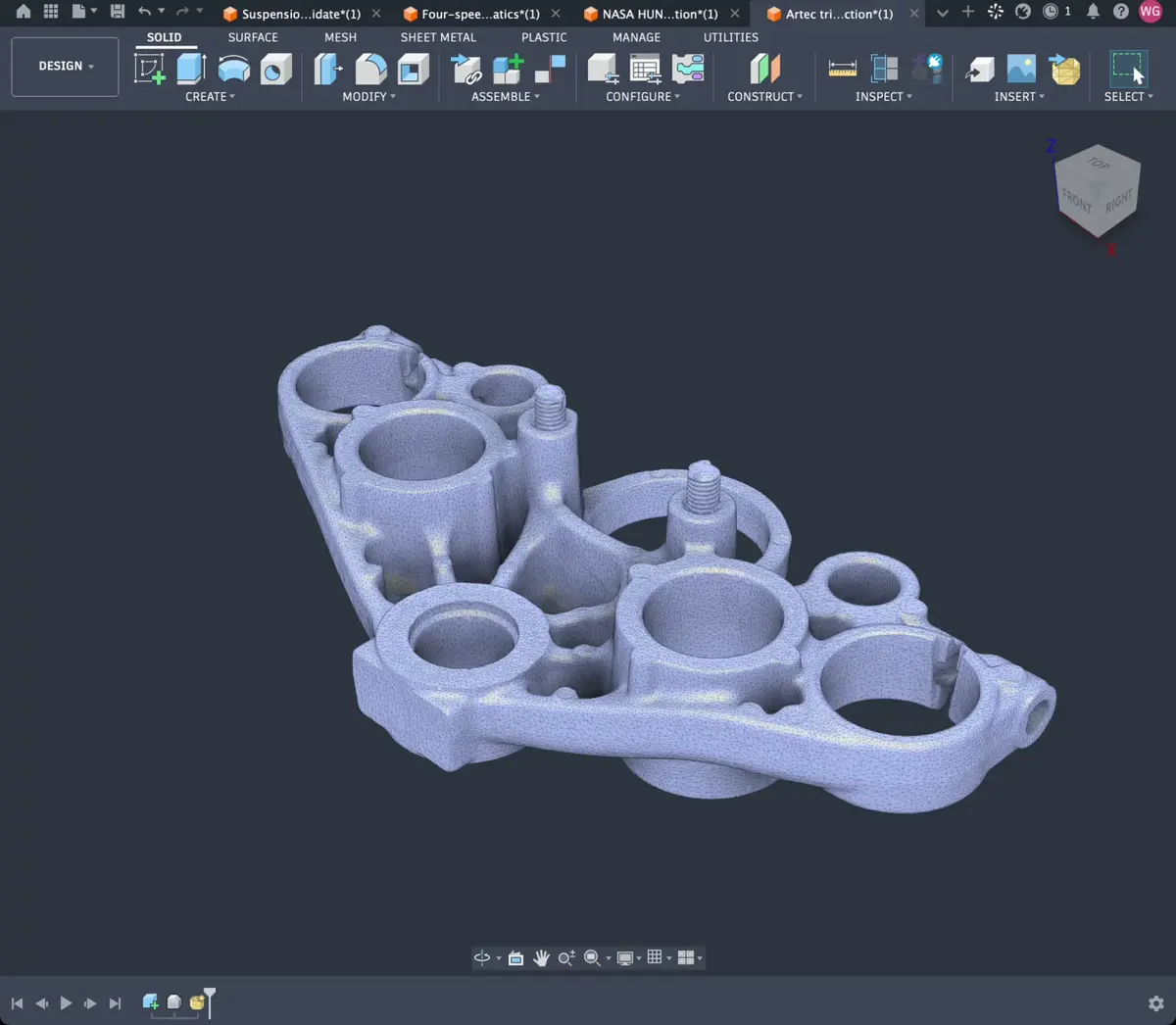
Edited recording of a supervised session. Follow-up instructions are omitted, chat activity is summarized, and playback is accelerated. Demo notes and sources
Scan: “Motorcycle upper triple clamp” by Artec Group inc. The source archive is licensed CC BY 3.0 and the model page lists CC BY 4.0. The scan itself is unchanged. Source