



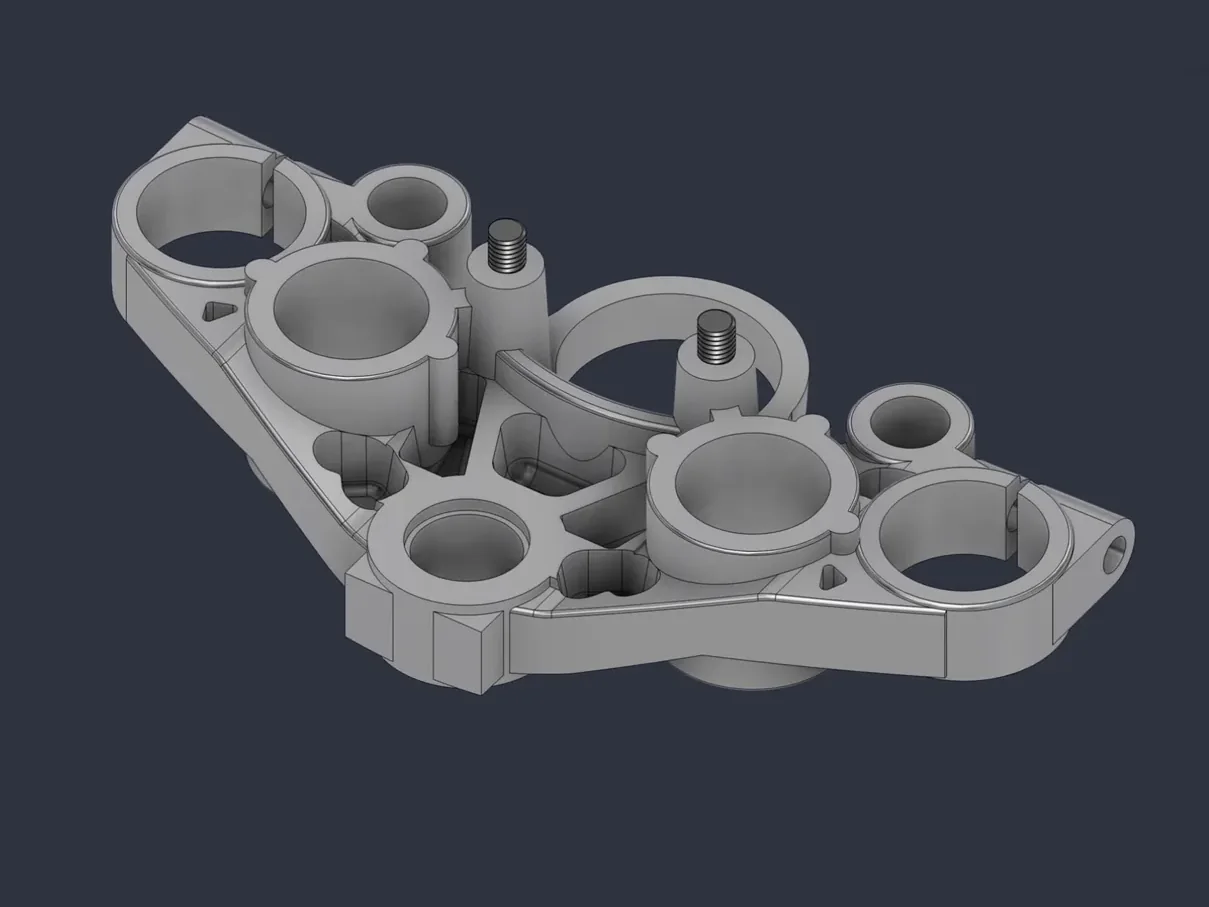
Rebuilding a cast triple clamp from a 3D scan
An Artec 3D scan of a motorcycle triple clamp, rebuilt as a parametric model in 37 sketches. Change a bore, the spacing, or the web, and the casting rebuilds around it.
Read the case study KiCadFabrication
Vector fills in LCSC part numbers, checks the bottom-side parts and the board edge, and exports Gerbers, drill files, a BOM, and a placement file in the format JLCPCB expects.
In KiCad, Vector routes from the ratsnest, refills the planes, and runs DRC with schematic parity against your fab’s rules until it comes back clean.
See the exampleVector builds the SPICE model from your schematic, runs it in ngspice, and changes the circuit in the open editor when a part won’t hold up.
See the exampleAn Artec 3D scan of a motorcycle triple clamp, rebuilt as a parametric model in 37 sketches. Change a bore, the spacing, or the web, and the casting rebuilds around it.
Read the case study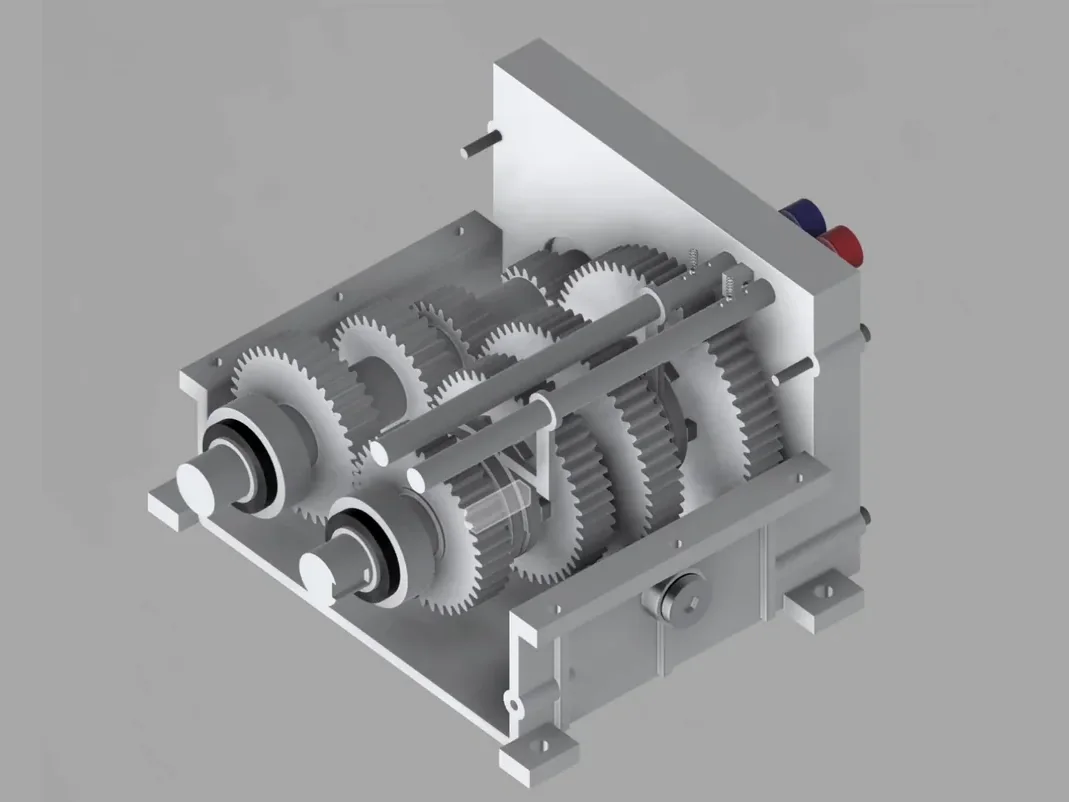
A four-speed gearbox designed from a written brief: 93 solids, with all four ratios measured from the assembly in motion.
Read the case study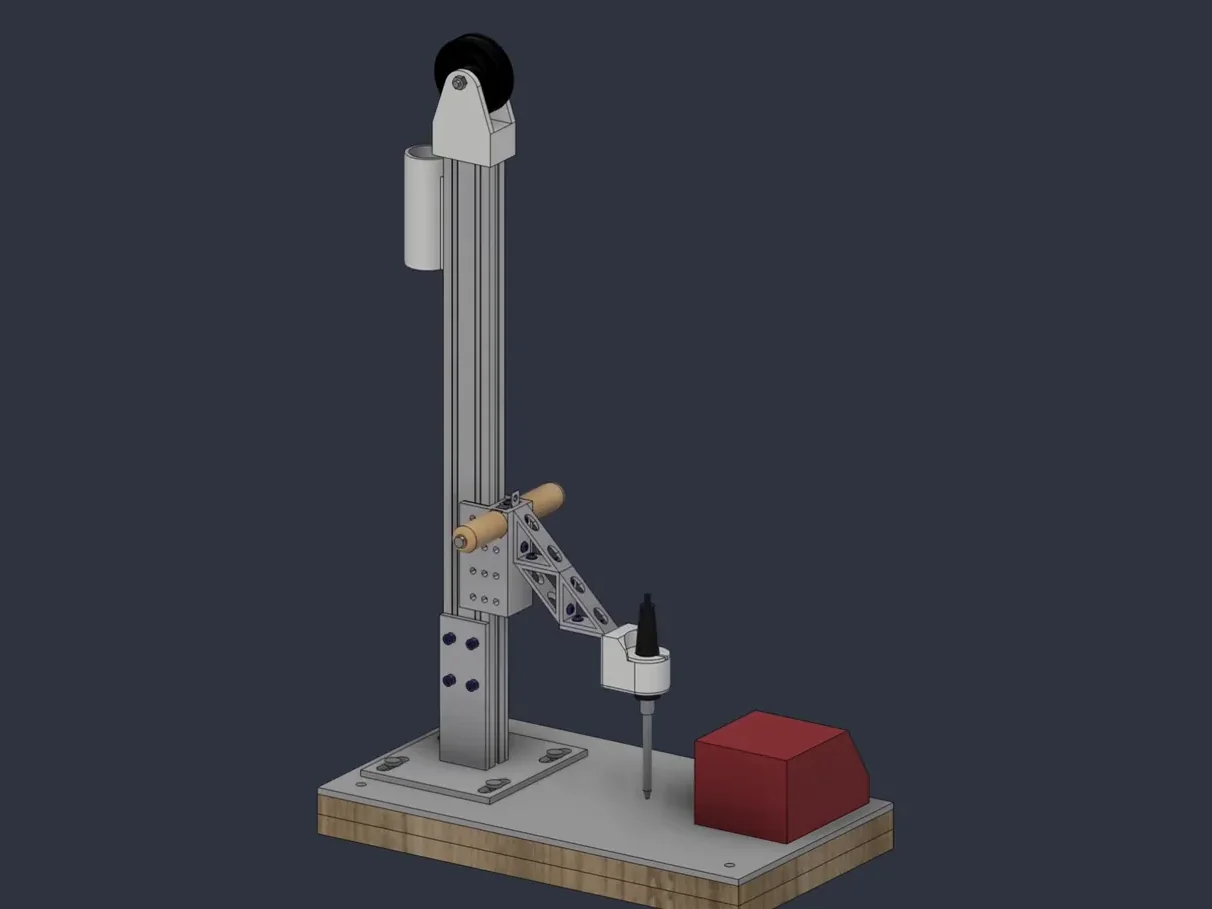
NASA HUNCH’s heat-stake press, modeled from its published drawing set: eleven custom parts, catalog hardware, and a working mechanism, checked against the sheets.
Read the case studyVector builds with sketches, features, mates, and parameters, so anyone on your team can open the model and keep working on it by hand.
It connects to the installation on your workstation. There’s nothing to migrate, and your files stay in the formats you use today.
Each step shows up in the conversation with what it changed, so you can follow the work and check it afterward.
Ask for a check and Vector measures the model: clearances, gear ratios, drawing callouts, and exported files.
We agree on the acceptance checks with your team before any work starts.
Vector runs on Windows and works with Autodesk Fusion, SOLIDWORKS, Bambu Studio, and KiCad.